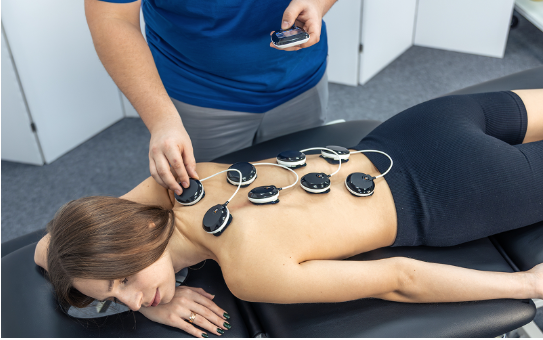
Patients often assume that musculoskeletal complaints are broadly handled the same way, with some combination of needles, manual work, and perhaps a herbal application. In practice a thoracic spine that has tightened over years at a desk and an ankle sprained two days ago sit at opposite ends of how a practitioner approaches treatment, and applying the wrong approach to either can slow recovery rather than help it. Four differences explain why someone seeking TCM for middle back pain in Singapore should expect something quite different from a patient arriving with a fresh joint injury.
1. How Soon Treatment Should Begin and What Happens First
Chronic postural strain has usually been developing for months or years, and there is no urgency in the first session beyond proper assessment. Time can be spent on history, posture, work setup, and movement patterns before anything is treated.
An acute sprain is different. The initial period after injury involves swelling and inflammation, and what is appropriate in the first days differs from what is appropriate a week later. Practitioners generally avoid vigorous manual work directly over an acutely injured joint early on, and treatment focuses on managing swelling and protecting the area before progressing to mobility work.
Patients arriving with a recent injury should also have it properly assessed medically, particularly where there is inability to bear weight, significant deformity, numbness, or severe pain, since fractures and serious ligament tears need imaging rather than manual treatment.
2. Whether the Problem Is Localised or Involves a Wider Pattern
An ankle sprain is a specific structure injured at a specific moment. Treatment concentrates on that joint and the tissue around it, with attention to how the rest of the leg compensates while it heals.
Middle back pain rarely originates entirely where it hurts. A practitioner will typically examine shoulder position, neck mobility, hip and breathing patterns, and daily posture, because thoracic tightness is frequently the visible end of something involving several areas. Treatment that addresses only the painful spot tends to produce relief that lasts until the next working week.
3. The Role of Manual Techniques Versus Rest and Protection
Tuina and manual mobilisation generally feature prominently in chronic postural work, where the aim is restoring movement to tissue that has become restricted over time. Cupping is sometimes used across the upper back for the same reason.
For acute injuries, the emphasis shifts. Early treatment of TCM for sprained ankles in Singapore tends toward reducing swelling and protecting the joint, with manual work introduced progressively as the tissue settles, and a practitioner who begins vigorous manipulation on a joint injured two days earlier is working against the healing process rather than supporting it.
4. How Long Each Typically Takes and What Progress Looks Like
Acute injuries follow a reasonably predictable healing timeline, and improvement is usually visible week to week as swelling subsides and movement returns.
Chronic postural complaints improve less linearly. Relief after a session is common; holding that relief depends substantially on whether the underlying posture and workload change. Patients expecting a chronic problem to resolve in the same pattern as an acute one frequently become discouraged when symptoms return after a few good days.
Knowing What to Expect Before the First Session
For either presentation, a practitioner should explain what they have found, what they are aiming for, roughly how many sessions before reassessing, and what you can do between visits. For postural pain in particular, the work done outside the clinic usually determines whether improvement holds.
Any worsening symptoms, new numbness or weakness, or pain that does not follow the expected pattern warrants medical review rather than continued treatment, and a good practitioner will say so directly rather than persisting.
Contact Liang Yi TCM to have your back or joint complaint assessed and discuss which approach suits its stage and pattern.